Week by Week Recovery: Constant Equine-Assisted Providers Year-Round
Regular, foreseeable time with steeds modifications individuals. Not overnight, not in one enchanting session, however in the quiet rhythm of appearing week after week. The barn smells the very same, the crushed rock crunches the same, and a gelding who enjoyed you from the much fencing last Tuesday satisfies you at the gate this Tuesday. That kind of consistency is where restorative horsemanship and various other equine-assisted services beam. The work is experiential and somatic, based in today minute, yet the actual payoff appears in patterns. Nervous hands soften. Breathing slows. Interest expands. Borders become clearer, kinder, and firmer.
I have actually enjoyed teenagers with ADHD organize their approach to tacking without a punctual after 8 weeks of practice. I have actually strolled next to adults who start a session with chest-tight anxiousness and coating tall, shoulders unlocked, breath also. I have stood with moms and dads who cry quietly when their autistic child initiates a grooming series, waits for a steed to change weight, and then light beams when the unguis lands carefully in their palm. None of it is a trick. It is the outcome of well-structured equine-assisted activities, held in a consistent container, across seasons.
Why consistent once a week job modifications outcomes
Horses respond honestly to what remains in front of them, not to what we indicated to do. That comments loophole shows self-awareness faster than talks. The nerve system additionally likes repeating. Somatic healing with equines builds on this truth, using straightforward, repeatable experiences to strengthen guideline. When an individual methods stopping at a cone, pausing to check for the equine's ear flick or eye blink, after that exhaling prior to requesting for an advance, the body learns that series. Executive function, impulse control, and sensory modulation all take advantage of practice session in a living setting that likewise really feels meaningful.
One-off experiences bring understanding and are excellent for intros or corporate morale. For actions adjustment, the nerve system requires steady exposure, time in the saddle or on the lead, and chances to fail securely and attempt once again. Weekly sessions, particularly in 8 to 12 week arcs, provide space for micro-adjustments. You can scale tasks up or down, repair service ruptures, and commemorate tiny wins that would certainly be invisible in a single intensive.
What a session really looks like
Visitors typically anticipate continuously riding. Actually, equine-assisted services consist of a spectrum: foundation, brushing, barrier job, mounted job, and reflective combination. The balance depends on objectives, weather, and the person's nerve system on that day.
A typical 60 min restorative horsemanship session for a young people with interest obstacles may flow such as this. The initial five mins at the rail check in on rest, institution, and energy, then co-create a 2 line plan. Fifteen minutes of grooming follows, with a concentrate on sequencing, bilateral motion, and relational awareness: curry in circles, examine the eye, button sides, notice when the steed shifts. 10 mins of leading teaches timing. We might practice stop-start, backing three steps, or weaving cones with tidy turns. If placed job fits the goals and authorization is clear from both biker and steed, we spend twenty minutes at walk with shifts, uploading method, or route patterns. The last 10 mins assess what transformed, after that return the https://pastelink.net/2d8b1l8e equine to the paddock with a cool-down walk and a final give thanks to you.
Equine-assisted coaching for adults or groups frequently utilizes groundwork only. You might establish a boundary exercise, such as sending out a horse through a chute without tipping inside the rails on your own. Or design a team building with steeds test where sets lead 2 steeds with various barriers while keeping a concurred distance and speed. The debrief connects barn options to workplace habits.
The horse as co-facilitator, not a tool
Good programs deal with horses as partners with company. That is not sentimental. It is practical and ethical. Steeds are target pets with large sensory transmission capacity. They get micro-tension, breath patterns, and intent. If we pay attention, they become exact mirrors, not courts. A mare that walks away each time a participant tenses is not being difficult. She is giving the kindest feasible comments about congruence.
We construct sessions that appreciate this. Equines can decrease a request or deal authorization signals that we recognize. We turn workloads, fit tack very carefully, and take care of herd characteristics so the steed at work is mentally readily available. Weekly routines spread work across the herd and keep people fresh. On hot weeks, we reduce strengths or pivot to shaded foundation. In wintertime, we pick much shorter mounted sets with longer workouts to protect joints.
A year-round schedule that maintains momentum
Consistency across seasons is where several family members stumble. College starts, daytime shrinks, mud shows up, and the regular liquifies. With a practical year-round layout, you can sustain equine-assisted services without burnout.
Spring invites new objectives. Steeds dropped, energy surges, and outdoor room opens. We assess winter season success and include one or two fresh obstacles, like a sensory lane with wind chimes and tarps for an Alternate therapy for sensory difficulties track. Springtime also brings allergic reaction factors to consider and glossy ground on thaw days, so we plan much shorter trots, more walk poles, and extra time for pasture returns.
Summer lengthens sessions. Mornings or nights avoid warmth. For ADHD equine finding out support, this is a solid duration to expand tasks: multi-step barn chores, placed path loops, and timed but pressure-light games that award sequencing over rate. Hydration and color matter. Horses require salt, rest days, and fly protection. Over warmth index days, we relocate to fan-cooled pet grooming bays and breath collaborate with hay internet in sight to keep motivation high while staying safe.
Autumn concentrates. Regimens return with college, and we make use of the framework. Sector work develops, patterns come to be more specific, and sensory tons is moderate with less bugs and milder temperature levels. Fall is likewise my favored season for equine-facilitated wellness sessions that mix mindfulness, long-line leading, and field monitoring of herd habits. Participants find out to spot subtle interactions, like a tail swish that suggests step, or a triangle of room offered to a lower-ranking gelding.
Winter instructs perseverance and body care. Mounted job may diminish to home windows of reasonable ground, but foundation can grow. We do even more interior or sheltered sessions, liberty operate in tiny pens, and slow-moving, thoughtful workouts that develop position and equilibrium. Grooming becomes introspective warmth, with focus to skin, ears, and unguis. Somatic healing with horses in wintertime leans right into breath, rhythm, and co-regulation. Nobody is in a rush, and truthful rest counts as progress.
Case illustrations from the rail
A center schooler with a consolidated presentation of ADHD arrived tight-jawed and late most weeks, speaking quickly, shoes untied, knapsack askew. The very first month, sessions concentrated on foreseeable bookends: hang knapsack on the exact same hook, greet by name to the exact same 2 steeds, check the white boards for the plan. Grooming devices lived in a caddy in a dealt with order, and he returned each product prior to going on. By week six, he initiated the series without cueing. By week 8, he asked to upload at the trot, a much more complicated motor job. His class instructor reported a moderate yet real drop in missing out on assignments, from seven in September to three in October. At the barn, he relocated from verbal impulsivity to waiting a complete breath after a horse's ear flick before providing his next cue.
A 9 years of age in an autism equine learning program spent the very first a number of sessions simply viewing the herd. We maintained pressure reduced. He suched as duplicating the same course to the very same mare, standing with one hand on the fencing blog post. On week 4, we included a sensory route with crunchy leaves and a reduced bridge. He pressed his hands on the bridge slab, taken a breath out, after that led the mare over in two careful steps. The change was a shudder through both bodies. After that, he exercised halts with the bridge as his reset point. Two months later on, his occupational therapist kept in mind boosted tolerance for changes in institution, specifically when a foreseeable sensory anchor was offered.
A 32 years of age with high standard anxiety desired equine-assisted mentoring to quit cold throughout discussions. We concentrated on groundwork. She exercised asking a stable gelding to back 3 steps, then stop briefly, after that produce hindquarters one action. The sequence was deliberately brief. When her breath drawback returned, the gelding elevated his head a hair. She learned to grin a little at that hint, exhale, reduced her hands, and ask once more. By session 10, she can hold relaxation with a much longer pattern. She reported her heart rate in meetings went down from the 120s to the 80s, verified by her smartwatch.
A young adult with sensory handling obstacles feared loud arenas. We built resistance in thin pieces. Beyond lessons, we did five minute walks near the arena door, after that inside with ear defense, then 2 cones in sight, after that a lead walk while one biker trotted behind-the-scenes. The program felt dull theoretically. In method, she got ability in noticing bewilder before it surged. That is the significance of anxiousness support with steeds: not brute-forcing direct exposure, yet reviewing sincere signals and changing with dignity.
Skills that travel home
Equine-assisted tasks resemble equine tasks. Beneath that surface, they grow skills that stick away from the barn. Leading a horse off the shoulder at a stroll trains pace control and spatial borders, helpful in jampacked corridors. Cleansing hooves demands bilateral sychronisation, specific positioning, and persistence. Placing requires a list in a clear order, which maps directly onto packing a knapsack or preparing for a conference. Experiential knowing with equines builds meta-skills, not trivia.
Somatic devices become muscle memory. Individuals learn to scan peripheral vision, drop their shoulders, and breathe into the belly due to the fact that an equine's lick and chew informs them they struck the best note. Over months, those hints swap to inner ones. That is the handoff we desire: from external biofeedback to sturdy self-regulation.
Coaching for leaders and teams
Equine-facilitated mentoring is often disregarded as a trust autumn with hay. The severe programs do not go after theatrics. They established tasks that expose default patterns, after that support tidy experiments. In a group building with steeds context, one team could discover that 3 exhibitionists give signs at once, puzzling the horse and each various other. The equine stalls, ears flipping in between voices. With advice, they agree on a lead and a time-bound plan. The steed complies with within seconds. The debrief is sober and concrete: share airtime, specify duties, keep the ask simple.
The genuine benefit of recurring work is carryover. Quarterly or month-to-month follow-ups beat one-off offsites. Leaders bring real-time tasks, run a barn task with the same communication patterns, and entrust to 1 or 2 details modifications to examine Monday early morning. Over a year, cohesion grows in measurable methods, like shortened conference times or faster decisions at stuck points.
Safety, extent, and great judgment
Not every barn is a clinic. That is great. It does mean we need quality. Healing horsemanship concentrates on horsemanship skills educated with adaptations that support development and health and wellbeing. It is not mental wellness therapy. Equine-assisted solutions is a broader umbrella that can include equine-assisted psychotherapy when a certified clinician partners with an equine professional. Programs should be transparent concerning credentials, supervision, and limits. Households deserve to recognize when a referral to a psychological health therapist is appropriate.
We have tough lines on safety. Safety helmets for mounted job and often for groundwork with young people. Clear quit words. Approval from horse and human. Weather condition calls that err on care. An excellent sector rule of thumb is to review danger each 10 minutes and act early. The cost of rescheduling is less than the expense of pushing with a red flag, whether that is a horse's limited jaw or an individual's dissociation.
A straightforward means to keep once a week sessions sustainable
The hardest part of consistency is logistics, not motivation. Borrow from sporting activities. Place barn time on the household calendar and safeguard it like a game.
- Choose a time you can protect 80 percent of the year, not an excellent port for a solitary season.
- Prepare a barn bag that obeys the door with boots, rain jacket, handwear covers, and a snack.
- Build a short pre-lesson ritual: shower room, water, 3 deep breaths in the automobile, after that go.
- Pair the drive with a rewarding habit, like a preferred playlist or audiobook chapter.
- If you must avoid a week, schedule a same-week touchpoint, also a 15 minute foundation check-in, to maintain the groove.
Measuring progression without missing out on the point
Data aids. Perfection eliminates delight. We track a small number of indicators and revisit regular monthly. For a youth in ADHD equine learning support, we may count how many grooming tools return to the caddy without triggers, or how many seconds pass in between a hint and an equine's feedback. For stress and anxiety assistance with equines, we might log pre and post session breath rate, or ask for a 1 to 10 rating of distress at three points throughout the session. Educators and caregivers can share parallel notes: fewer missing jobs, less morning problem, calmer going to beds. If a number issues, it is since it connects to a lived outcome.
At the barn, we also gather qualitative notes. Did the participant notification and express a horse's signal accurately? Did they fix a mistake without spiraling into pity? Those flags frequently anticipate long lasting change far better than a stopwatch alone.
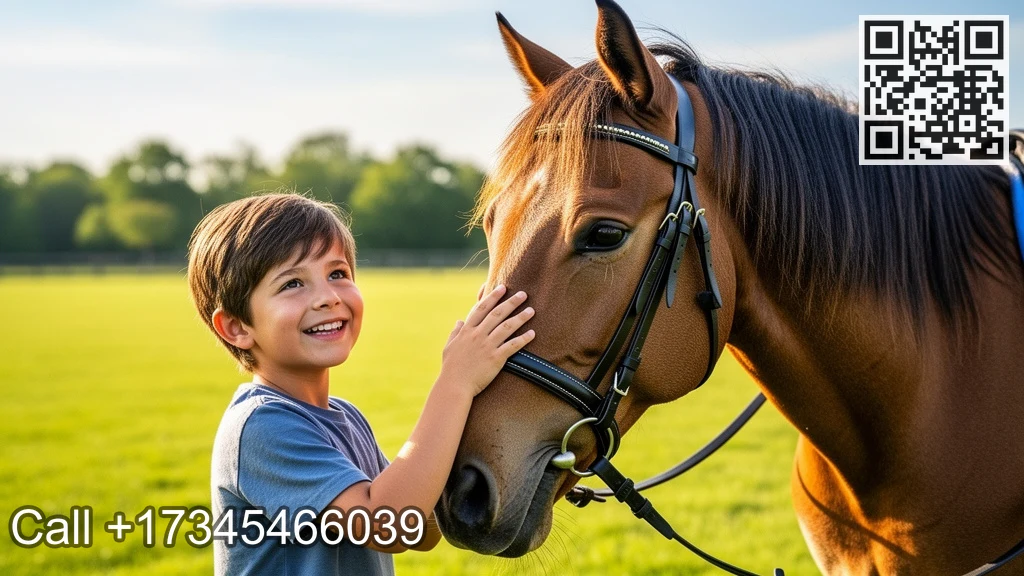
Caring for the equines via the seasons
Consistent solutions only function if the equines thrive. That needs planning. We develop a herd with various dimensions, ages, and strides so we can match equines to goals and revolve work. A patient gelding is not a default beginner steed, and a sensitive mare is not out-of-bounds to brand-new participants. We assume in weeks and months, not just daily routines. An equine that functions 3 sessions Tuesday could get Wednesday off or a path stroll just, after that a light Friday. In summer, we track warm stress and anxiety indications and adjust by degree, not by blowing. In winter, we enable extra warm-up time and skip gathered deal with icy ground.
Conditioning issues. Equines stay sound with different surface areas, hillside work, ground poles, and days that are just simple. Mental health and wellness issues as well. Turnout with a compatible herd is non-negotiable. We let horses state no and we listen. A horse who pins ears at the placing block gets a vet check, a saddle fit check, and a work review before returning to work.
Common difficulties and practical fixes
Weather is the evident villain. A covered arena aids, however not all programs have one. Creativity bridges the void. On mud days, foundation in a barn aisle can be richer than a sloppy loophole in the arena. Usage cones for small problems, teach a 2 go back and a bend, or established a small sensory path with a tarpaulin and a wind sock.
Transportation stops working. Companion families or trip shares with history checks can lower cancellations. Offer periodic virtual check-ins when travel breaks. The individual can exercise breathing, visualization, and a gear talk-through with a curry comb at home, then return following week with less rust.
Motivation dips around weeks five to 7 in numerous programs. Plan for it. This is where little, visible wins maintain energy. Present a new yet obtainable pattern, movie a brief phone video to examine progress, or invite a caretaker to watch the last five mins and share a real observation.
The initially four weeks, up close
If you are brand-new to equine-assisted tasks, the very early arc collections tone and trust fund. Here is a realistic glide path.
- Week 1: Meet the herd, excursion the space, method barn regulations by doing, not lecturing. Touch brushing devices, lead simply put lines, find out the stop cue. No thrill to place, even if riding is a future goal.
- Week 2: Include an easy series with choice. Two brushing tools, then one leading task, after that a breath check at the mounting block. If riding, install for five minutes of walk with large loopholes, dismount early to finish with success.
- Week 3: Layer complexity carefully. Present a new obstacle or a brand-new location of the residential or commercial property. Method seeing equine signals out loud. Maintain debrief short and certain, with one takeaway linked to life outside the arena.
- Week 4: Settle. Repeat the sequence a lot more cleanly, add one tiny obstacle like a halt-to-back change, and commemorate a minute of co-regulation, whether that is a yawn, lick and chew, or a human sigh and shoulder drop.
By the end of the first month, many individuals have a map in their body. They know where to hang their bag, where to find the curry comb, and just how to ask a horse to quit with clearness. They might not call it, however their nerves has started to trust the space.
Where equine-assisted services fit with various other supports
Horses are not a remedy. They are a potent context for exercising abilities that many people battle to discover in abstract settings. Set equine-assisted coaching with talk treatment when deep processing is needed. Incorporate an autism equine learning program with school-based assistances so that brand-new abilities have places to land. For sensory challenges, coordinate with an occupational therapist to identify complementary goals, like hefty work on barn duties and precise hand placements throughout grooming to sustain proprioception.
The best outcomes get here when every person moves in the exact same instructions. Share simple, concrete notes throughout suppliers. If the barn found that 3 breaths before an ask improves outcomes, put that language right into a class or office setting. If a therapist observes a pattern of freeze in social risk, bring a job to the barn that evokes a mild version of that danger, so it can be practiced with assistance and immediate feedback.
The lengthy view
Year-round work welcomes a slower, kinder speed. Wintertime steadies, springtime experiments, summer season expands, autumn fine-tunes. The steed remains a mirror and a companion, asking you to show up as you are, then attempt something a hair more skillful. Over 40 to 50 sessions in a year, adjustment strengthens. Family members see fewer debates on barn days. Teachers see a boost in turned-in job. Teams run a conference in 40 minutes that made use of to sprawl to 90. The equines stay well, the arena stays a place of fact without drama, and the calendar holds.
If you are taking into consideration beginning, you do not require heroic resolve. You require a Tuesday that primarily works, a program that honors both equine and human, and a desire to exercise little things till they matter. Week by week, they will.
Happy Hooves Wellness
9177 Gross Rd, Dexter, MI 48130
+17345466039
https://www.hhooves.com/